
Fitting a fire door is a complicated process requiring several carefully installed components. If just one of these elements isn’t fire safe or hasn’t been fitted correctly, it can compromise the entire integrity of the door, rendering it useless in the event of a fire.
But don’t worry – there are things you can do to ensure the fire doors you’re fitting or inspecting are safe and compliant. In this blog post, we’ll explore the most common fire door installation mistakes and the steps you can take to avoid them happening.
Most Common Fire Door Installation Mistakes
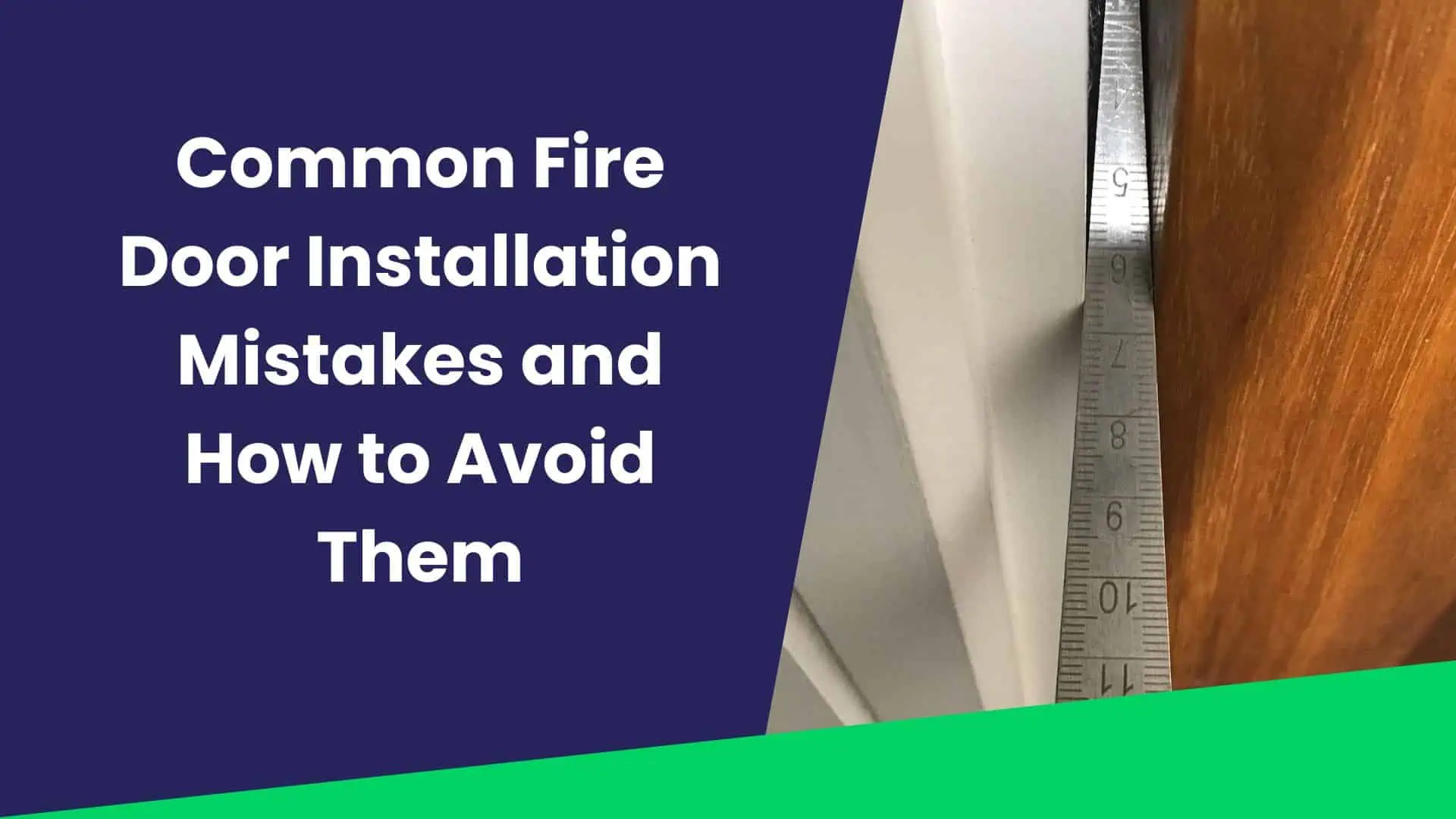
- Incorrect Gap Sizes
When the door leaf is in place, there should be a consistent gap between the door leaf and the frame, as specified by the manufacturer. This is to make sure the door can move freely, as well as providing some ventilation. In the event of a fire, intumescent seals along the door and frame then activate and plug any gaps to stop the spread of fire and smoke.
According to most certificate data sheets, the door-to-frame gap should be 2mm – 4mm, while the threshold gap (the gap between the bottom of the door and the floor) is typically 8mm – 10mm. However, if the door is FD30s or FD60s for smoke control then the threshold gap can be no larger than 3mm as stated in BS 8214. Some fire doors have very limited allowances, typically 1mm.
Occasionally, fire doors have been over-morticed or poorly installed resulting in gaps that are too wide. If this happens, it can compromise the door’s effectiveness.
We recommend always checking the manufacturer data sheet or other evidence for the fire door leaf you’re installing or inspecting. And it’s a good idea to use a taper gauge tool to check the size of the gaps as accurately as possible.

- Improper Hardware
Hardware like hinges, latches, closers and seals all play a crucial role in the fire safety performance of a fire door. But all too often we come across hardware that either isn’t fit for purpose, has been poorly fitted, or not maintained up to standard.
Common issues include:
- Loose door hinges and faulty latch mechanisms
- Corrosion or damage
- Misaligned hardware
- Incorrect or loose fixing screws
- Improper intumescent protection
All of these things can impact the performance of the door and its ability to close fully and latch properly. During installation and inspection, it’s crucial to check the certification of each component and adhere to the manufacturer’s instructions at every stage.
- Failure to Use Fire-Rated Components
Another common fire door installation mistake is failing to use fire-rated components. Each part of a fire door needs to have been rigorously tested in real-life fire conditions by the manufacturer.
Every fire door component should be sourced from reputable manufacturers, have third-party certification, proof of performance and meet specific industry standards. Without these things, you can’t be sure that the fire door will perform as it should in the event of a fire.
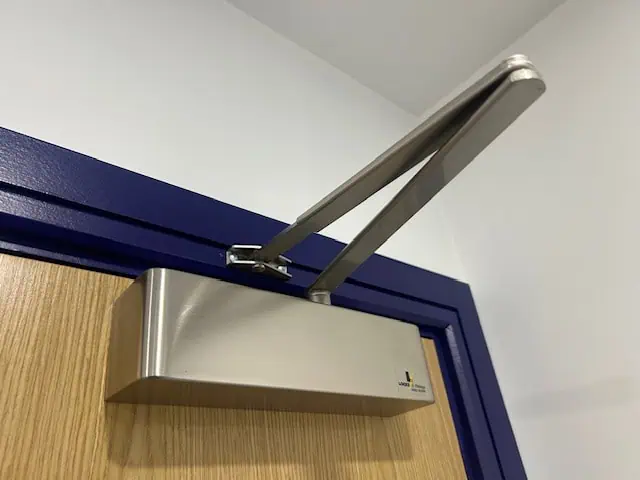
- Closer in Wrong Position
Nearly all fire doors need a self-closing device as they ensure the door can self-close all the way to the rebate stop and latch. But a common mistake is fixing the closer in the wrong position. When this happens, it can impact the door’s ability to close properly. Over time, it can also cause damage to the door through slamming.
Before installing, you need to have evidence of the closer’s fire performance and proof that it’s been tested using the particular fire door leaf and configuration that you’re planning to use. For example, most door closers are installed on the pull side of the door. But for certain fire door configurations, it might need to be on the push side.
It’s also important that the door doesn’t bind on any seals or the frame when it closes. The closer must be able to overcome this friction. If it can’t, it means the fire door is non-compliant.
- Cutting Apertures into Doors On-Site
One other common mistake when installing fire doors is when apertures (like glazed windows, ventilation grilles and letter plates) are cut into the doors on-site. Under the BWF-Fire Door Alliance Scheme, cutting apertures into a fire door on-site is not permitted – even by an approved aperture cutter.
Apertures must only be fitted by companies licensed and permitted to do so. And the work must be done off-site before installation has begun.
If an aperture is cut into an unsuitable door type or by someone who isn’t qualified to carry out the work, the whole fire-resistant property of the fire door may be affected, and the certification rendered null and void.
Consequences of Mistakes
Every component of a fire door set has a crucial role to play. Even the smallest mistake can impact the performance of a fire door, which can put lives and property at risk in the event of a fire.
But mistakes can and do happen – either through installation errors or missed damage during inspections. And unfortunately, they can have catastrophic consequences. For example, following the devastating Grenfell Tower fire that killed 72 people, the Grenfell Inquiry found that 106 of the building’s 120 fire doors were non-compliant. Many residents also reported that their self-closers were either missing or broken, meaning many were left open on the night of the fire causing toxic smoke to pour into the lobbies and stairwells.
Avoiding Mistakes During Installation
One of the best ways to avoid mistakes during installation is to hire the right person to fit the fire door. Fire door installations should always be carried out by a ‘competent person’ who has completed fire door installation training. Accreditation is a useful way to ensure your knowledge and skills are up to date, as well as providing proof of competency to your customers.
Another way to avoid mistakes during installation is by always sticking to the fire door certification and installation instructions provided by the manufacturer. These include detailed installation procedures, along with visual aids to make the instructions easier to follow.
You should also always use the fixings supplied with any fire door hardware and check that they have the right fire door ratings and third-party certificates.
Compliance and Inspection Tips
Having fire doors installed is not enough on its own. In order to ensure compliance, it’s vital that you undertake regular inspections of fire doors and all their components.
Over time, everyday use of fire doors can cause wear and tear or alterations to the door leaf, door frame and hardware.
As such, the BS:9999: Code of Practice for Fire Safety in the Design, Management and Use of Buildings states that fire doors should be inspected at least every six months.
There are some exceptions to the rule, however. Regulation 10 makes it a legal requirement for any residential buildings over 11 metres to have their fire doors in any common parts inspected quarterly and flat entrance doors checked annually.
In addition, the Fire Safety Order 2005 (FSO) states that the frequency of inspections should be determined by the risk to the safety of people and the expected usage of doors. In other words, how often you inspect your fire doors depends on how often they’re used.

In Summary
A complete fire door installation is made up of many different steps and components, with each one playing a vital role in the door’s effectiveness and ability to save lives.
It’s a complex process and one small mistake can lead to fire door failure which, like we saw with the Grenfell fire, can have devastating consequences.
That’s why it’s really important to ensure fire door installations and inspections are carried out by trained professionals who’ve adhered to the manufacturer’s instructions at every stage.
At UK Fire Door Training, we’ve designed a series of FireQual and CPD-endorsed courses to improve your skills, knowledge and competency when installing and inspecting fire doors. To browse or book your place onto one of our courses, click here.


0 Comments