

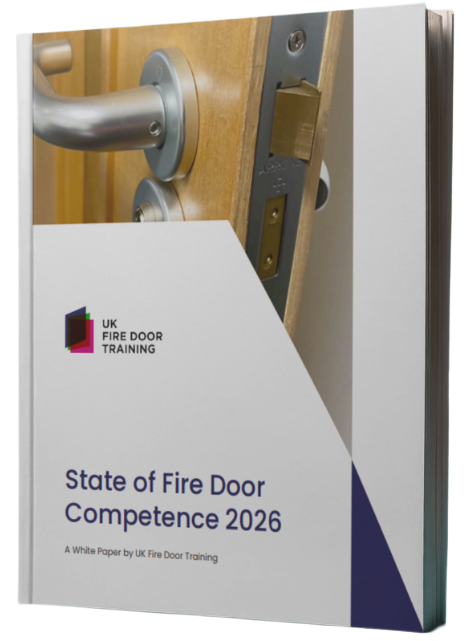
We’ve just published our most comprehensive research into the fire door sector to date, and the findings demand attention.
Based on a national survey of 126 fire door practitioners conducted this month, the results reveal a sector that has learned the language of competence but hasn’t yet built the systems to deliver it. Nearly four years after the Building Safety Act received Royal Assent, 59% of practitioners still don’t know how to evidence their competence.
The central paradox
78% of respondents know what the Building Safety Act is. 71% feel confident they understand SKEB. Yet when asked to demonstrate that competence, 85% default to training certificates — which by definition cannot evidence experience or behaviours. The confidence itself reveals the gap.
What’s happening on site
The numbers paint a stark picture: 70% rarely or never hear competence discussed on site, and 87% witness work they believe to be incompetent at least occasionally. The legal duty exists. The supporting structure exists. The implementation layer is missing.
Why this matters now
In a post-Grenfell regulatory environment, competence isn’t optional — it’s a legal requirement that must be demonstrable and defensible. Where evidence doesn’t exist, organisations face enforcement action, contractual disputes, and insurance challenges. More critically, unclear competence allocation puts residents at risk.
The white paper sets out where we are, why progress has stalled, and what must change. It includes practical recommendations for sector bodies, training providers, contractors and clients.


0 Comments